
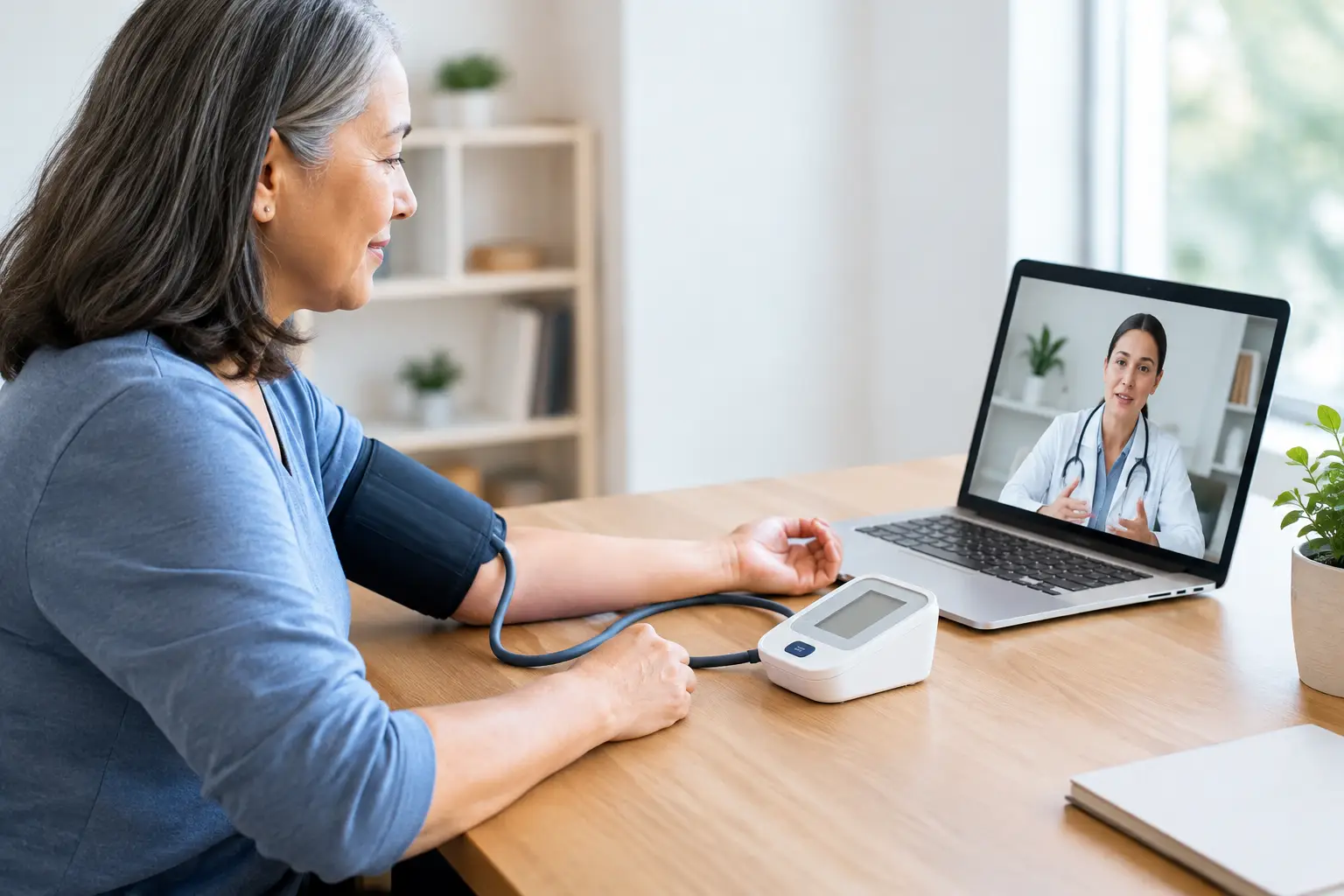
A blood pressure reading of 168/102 before work can change the whole day. You may be worried, unsure whether your medication is working, or frustrated that the next cardiology appointment is weeks away. Telehealth hypertension management gives many adults a faster path to specialist guidance, a practical plan, and appropriate follow-up from home.
High blood pressure is common, but it should not be brushed off simply because it often causes no symptoms. When readings stay elevated, the long-term effects can involve the heart, brain, kidneys, and blood vessels. The right next step depends on your numbers, symptoms, medical history, current medications, and whether the readings are accurate.
When a Virtual Cardiology Visit Makes Sense
Virtual care can be a strong fit when you have repeated high home readings, need a medication review, have side effects after a recent change, or want specialist direction on a blood pressure plan. It can also help when hypertension occurs alongside palpitations, high cholesterol, diabetes, sleep concerns, weight changes, or a family history of heart disease.
A video visit does not replace emergency care. Call 911 or seek emergency evaluation now for chest pain or pressure, severe shortness of breath, fainting, new weakness or numbness on one side, trouble speaking, confusion, sudden vision changes, or a severe headache with concerning symptoms. A reading at or above 180/120 may be a hypertensive crisis, especially when symptoms are present. Do not wait for a virtual appointment in that situation.
For nonemergency concerns, prompt virtual access can prevent a familiar pattern: concerning numbers appear, messages go unanswered, and patients wait while uncertainty builds. A board-certified cardiology provider can assess the situation, determine what needs to happen next, and help coordinate care with your primary care provider when appropriate.
What Telehealth Hypertension Management Can Address
A useful hypertension appointment is more than a conversation about a single number. Your provider should look for patterns. Are readings high only in the morning? Did they rise after a medication was stopped, a new stimulant was started, or stress and sleep worsened? Are you taking medications consistently but still seeing elevated values? Is a cuff or measurement technique producing misleading results?
During telehealth hypertension management, a cardiology provider may review your home readings, health history, current prescriptions and supplements, prior lab work, cardiac testing, and risk factors. They may recommend medication adjustments when clinically appropriate, order or recommend follow-up testing, discuss lifestyle changes that match your circumstances, and advise whether in-person evaluation is needed.
Medication decisions should be individualized. One patient may need a dose adjustment. Another may be experiencing dizziness or swelling that calls for a different approach. Someone else may need to address a medication interaction, untreated sleep apnea, high sodium intake, alcohol use, or a condition contributing to high blood pressure. Virtual care is efficient when it leads to clinical judgment, not one-size-fits-all advice.
Bring Better Data to Your Video Visit
Home monitoring makes a virtual appointment more informative, but only when the readings are collected carefully. If possible, use a validated upper-arm cuff with the correct cuff size. Wrist cuffs can be less reliable, particularly if positioning is inconsistent.
For several days before your appointment, measure blood pressure at roughly the same times each day. Sit quietly for five minutes first, with your back supported, feet flat on the floor, and arm supported at heart level. Avoid caffeine, nicotine, exercise, and a full bladder for at least 30 minutes before checking. Take two readings about one minute apart and record both.
Bring your log to the visit along with the cuff brand, your full medication list, doses, and the times you take them. Include over-the-counter medications and supplements. Decongestants, anti-inflammatory medicines, certain stimulants, nicotine, and some herbal products can affect blood pressure or interfere with treatment.
A few isolated high readings do not always mean your treatment has failed. Pain, poor sleep, anxiety, illness, caffeine, and an improperly fitted cuff can all affect a measurement. But repeated elevations deserve attention. The goal is to identify the pattern early and respond with a plan you can realistically follow.
Questions Worth Asking Your Provider
Ask what blood pressure range is appropriate for you, how quickly you should expect a medication change to work, and what side effects require a call. If your readings are higher at home than in a clinic, ask whether white-coat hypertension or masked hypertension could be part of the picture. If you are planning surgery, ask what information your surgical team needs and whether additional cardiac evaluation is necessary.
It is also reasonable to ask how and when to follow up. Hypertension management works best when it is ongoing. A single visit may start the plan, but follow-up readings show whether that plan is safe and effective.
The Connection Between Blood Pressure, Stress, and Sleep
Blood pressure does not exist in isolation. Chronic stress, anxiety, panic symptoms, insomnia, alcohol use, and certain psychiatric medications can affect cardiovascular health. That does not mean high blood pressure is “just stress,” nor does it mean the answer is simply to relax. It means the full picture matters.
For patients who need both heart and mental-health support, coordinated care can reduce the burden of explaining the same concerns repeatedly. A clinician can consider how symptoms, sleep, medications, and cardiovascular risk overlap while maintaining the right safety boundaries. Any medication change should be made with the prescriber overseeing that treatment, not stopped abruptly on your own.
Lifestyle recommendations also need to be practical. Lowering sodium may help, but the advice needs to fit your schedule and food access. Exercise can improve blood pressure, but the right activity level depends on your symptoms and cardiac history. Weight loss may be helpful for some people, yet it should be approached with medical guidance when hypertension, heart disease, or multiple medications are involved.
How a Same-Week Visit Can Help
At Heart & Mind Health Partners, adults can complete a short intake, choose a same-week video appointment when available, and speak with a U.S.-licensed, board-certified specialist without a waiting room or a referral requirement. The appointment is designed to produce clear next steps: what your readings may mean, whether medication or testing should be considered, how to monitor at home, and when to seek in-person care.
Virtual specialty care is not the answer to every blood pressure concern. You may still need laboratory testing, an ECG, imaging, an in-person examination, or emergency evaluation. The value of an expedited video visit is that you do not have to spend weeks guessing which step comes first.
Do Not Wait for Perfect Conditions
People often postpone care because they want another week of readings, need time to improve their diet, or worry that their concern is not serious enough. If readings remain high, medications are causing problems, or you have new symptoms that are not emergent, getting specialist direction sooner is reasonable.
Start with the numbers you have, your medication list, and an honest description of how you feel. A timely conversation can replace uncertainty with a plan that fits your health, your schedule, and the level of care you need.